Sample content written for Haas Marketing by Searchable
SEO vs AEO vs GEO: what's the difference?
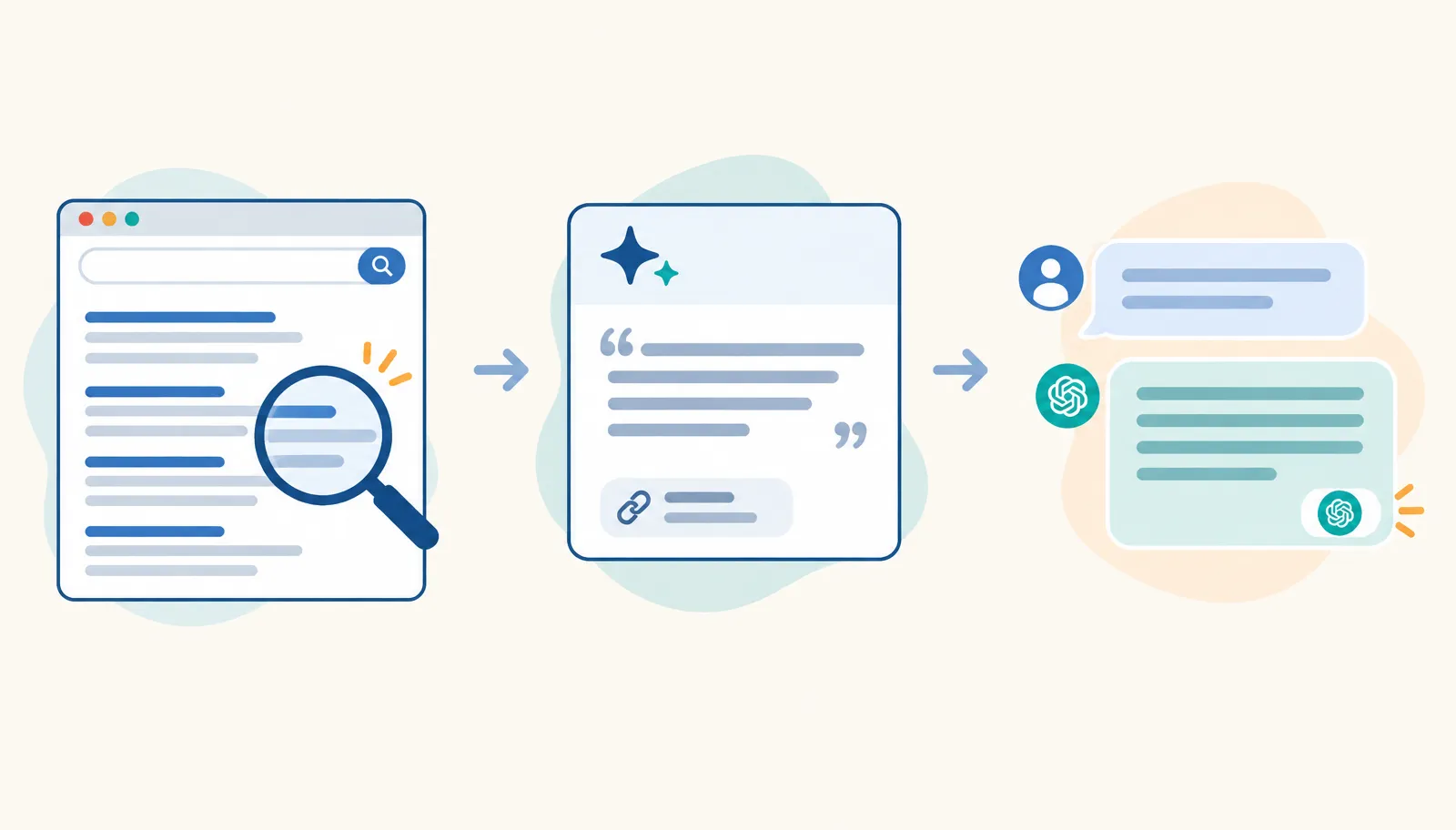
SEO gets your page into search results. AEO gets your page into the answer. GEO gets your brand into what AI models write. They rely on much of the same work, but they reward different things — and today you need all three.
Key definitions
- SEO (search engine optimization)
- The practice of improving a website so its pages rank higher in a search engine's list of results for relevant queries.
- AEO (answer engine optimization)
- The practice of structuring content so AI answer engines — such as Google AI Overviews, ChatGPT, and Perplexity — quote or cite it in the answers they generate.
- GEO (generative engine optimization)
- The practice of making a brand's facts, claims, and content part of what generative AI models learn and repeat about a topic across their responses.
- Zero-click search
- A search that ends without the user clicking on any result, because the answer was shown on the results page itself or in an AI answer.
What is SEO (search engine optimization)?
SEO is the practice of earning a spot in a search engine's list of results. Search engines match a page against what someone typed, weigh how well the page covers that topic, and rank it against every other page competing for the same query. Good SEO means your page is genuinely the best answer to a real search, and that the engine can find, read, and trust it.
The stakes are higher than they look: in the 2024 Zero-Click Search Study, SparkToro and Datos found that 58.5% of U.S. Google searches (59.7% in the EU) ended without a click on any result. Of every 1,000 U.S. searches, only 374 ended in a click to a website outside Google's own properties (360 in the EU). Ranking is still the price of entry — but a ranking alone no longer guarantees a visit.
What is AEO (answer engine optimization)?
AEO is the practice of getting your content used inside an answer written by an AI system — Google AI Overviews, ChatGPT, Perplexity, and similar tools. Instead of showing ten links, these systems read many sources and write one response. The win is being the source they quote and name, which puts your brand in front of someone who may never scroll a results page at all. The audience is no longer niche: OpenAI confirmed in July 2026 that more than 1 billion people use ChatGPT every week, and Google's AI Overviews reach roughly 2 billion users through Search. For a practical walkthrough, see How to Show Up in AI Search on the Haas Marketing blog.
What is GEO (generative engine optimization)?
GEO is the practice of shaping how generative AI models talk about you at all — not just on one page, but across everything they've read. When someone asks ChatGPT, Gemini, or Claude to recommend a tool or explain a topic, the model writes from patterns it has learned. GEO is making sure your brand, your facts, and your point of view are part of those patterns: consistent claims, quotable statements, and mentions on sources the models trust.
It is measurable, too. The peer-reviewed study "GEO: Generative Engine Optimization" (KDD 2024, Aggarwal et al., Princeton and IIT Delhi) found that adding citations, quotations, and statistics to content boosted its visibility in generative engine responses by up to 40%. In other words: pages written with liftable facts get quoted more often.
SEO, AEO, and GEO by the numbers
- 58.5%
- Share of U.S. Google searches that ended without a click on any result in 2024 (59.7% in the EU), per the SparkToro/Datos 2024 Zero-Click Search Study.
- 374 of 1,000
- U.S. Google searches that ended in a click to a non-Google website in 2024 (360 in the EU), per the same SparkToro/Datos study.
- Up to 40%
- Visibility boost in generative engine responses from adding citations, quotations, and statistics to content, per the KDD 2024 study "GEO: Generative Engine Optimization" (Aggarwal et al.).
- 1 billion+
- People who use ChatGPT every week, as confirmed by OpenAI in July 2026.
- ~2 billion
- People reached by Google AI Overviews through Search.
- May 2024
- When Google first launched AI Overviews in the United States, marking the shift from a list of links to a written answer on the results page.
SEO vs AEO vs GEO, side by side
| SEO | AEO | GEO | |
|---|---|---|---|
| What it optimizes for | Ranking a page in a list of blue links on Google or Bing. | Being quoted in a direct answer, like Google AI Overviews or Perplexity. | Being part of what a generative AI model writes when someone asks about your topic. |
| What the visitor sees | A title and description they click through to your site. | A written answer, sometimes with your brand cited as the source. | A conversational response that names your brand, product, or approach. |
| What the page needs | Relevant topic coverage, clear structure, internal links, and technical health. | Direct answers to real questions, stated plainly near the top, with facts an engine can lift. | Distinctive, quotable statements, consistent brand facts, and mentions across trusted sources. |
| How you measure it | Impressions, clicks, and average position in Google Search Console. | Mentions and citations in AI answers, plus referral traffic from AI tools. | How often AI assistants name you when asked about your category, and referrals from chat tools. |
Where they overlap
Most of the work is shared. All three reward content that covers a topic thoroughly, is organized into clear sections, and comes from a site that publishes consistently on that subject. A page nobody can crawl won't rank, won't be quoted, and won't shape what a model learns. So AEO and GEO aren't replacements for SEO — they're extra layers of care about how the answer is written and how consistently your brand shows up around it. We break down the overlap in How SEO and AEO Work Together.
How to do all three on the same page
- Pick a question people actually search for, and make it the page's heading.
- Answer it in the first two or three sentences, before any background.
- Break the rest into short sections with descriptive subheadings.
- Include specific facts, numbers, and definitions an engine can lift verbatim.
- Say who you are and what you do the same way everywhere, so models learn one consistent story.
- Link the page to related pages on your site so the topic reads as a cluster.
- Track impressions and clicks in Google Search Console, and watch for AI referrals.
Frequently asked questions
- Is AEO replacing SEO?
- No. AEO depends on SEO: AI answer engines draw from pages that are crawlable, well-structured, and rank well. Without solid SEO, there is nothing for an answer engine to quote.
- What is the difference between AEO and GEO?
- AEO targets answers generated by AI systems at the moment someone asks a question — like a Google AI Overview or a Perplexity response. GEO targets everything a generative AI model says about your topic across all its responses, including when no source is cited.
- Can one page be optimized for SEO, AEO, and GEO at the same time?
- Yes. A page with a question-based heading, a direct answer in the first two sentences, specific facts and numbers, clear subheadings, and internal links serves search rankings, AI answers, and generative models at once.
- How do you measure AEO and GEO results?
- Track impressions and clicks in Google Search Console, watch referral traffic from AI tools like ChatGPT and Perplexity, and periodically ask AI assistants about your category to see whether they name your brand.
Keep reading on the Haas Marketing blog
- How SEO and AEO Work TogetherWhy ranking and getting quoted build on the same foundation.
- How to Show Up in AI SearchWhat it takes for your pages to be cited by AI answer engines.
- 4 Simple Ways to Use Google Search Console to Improve Website PerformanceMeasure your progress and spot opportunities with GSC.
Let Searchable handle all three
Searchable audits your website, finds the topics you're missing, and writes drafts built to rank in search, get quoted by answer engines, and shape what AI models say about you — then pushes them straight to your site for review.